The Friction of Freedom: Analyzing the Paradox of Emergent Physics and Economic Friction in Wobbly Life
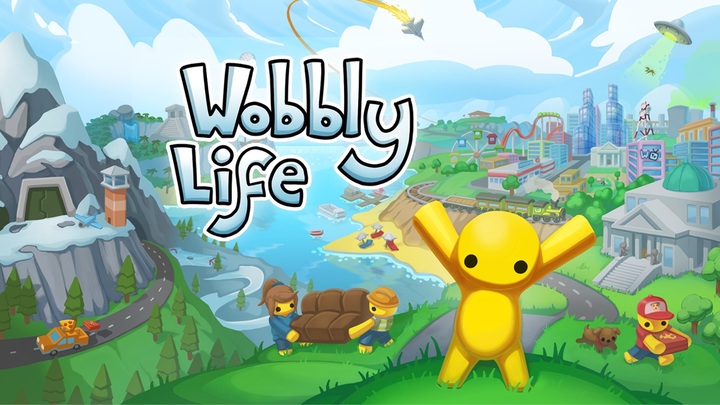
Wobbly Life stands as one of the most intriguing entries in the physics-sandbox genre. While at first glance it presents itself as a colorful, child-friendly playground filled with goofy ragdoll animations, beneath its bright aesthetic lies a fascinating mechanical tension. That core issue is the fundamental paradox between unpredictable emergent physics and rigid transactional economic progression.
Games that rely on ragdoll physics often thrive on chaos, failure, and hilarity. However, Wobbly Life introduces a traditional capitalist progression framework—forcing players to earn money through timed, precision-dependent jobs to purchase houses, vehicles, and items. When uncontrollable physics directly disrupt earnable rewards, the game creates a compelling friction between playful sandbox freedom and economic frustration.
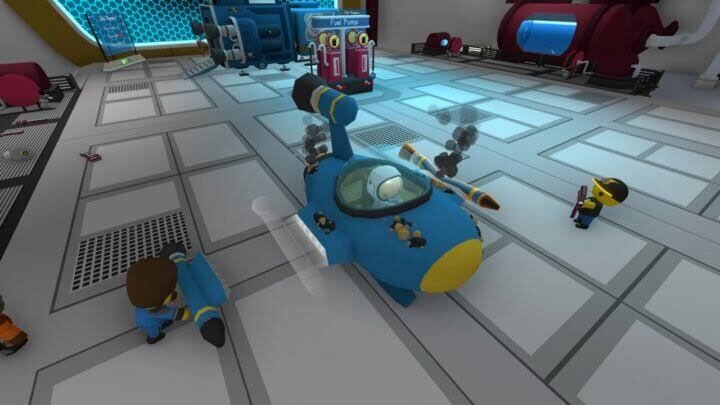
1. The Genesis of Wobble: Establishing the Dual Mechanics
When rubberbandgames launched Wobbly Life, they merged two vastly different design philosophy archetypes. On one side was the legacy of chaotic ragdoll simulators like Human Fall Flat or Gang Beasts, where losing control of your character is the primary source of entertainment. On the other side was the structured economy of life-simulators like Grand Theft Auto or Job Simulator, where tasks reward systemic, predictable labor with currency.
This duality forms the foundation of Wobbly Island. The player begins with nothing, kicked out of Grandma's house, and is told to get a job. The immediate design challenge becomes clear: how can a player reliably execute labor-based tasks when their character lacks a rigid skeletal system or consistent grip mechanics?
2. The Anatomy of the Two-Handed Grab: Precision vs. Instability
The defining mechanical interaction in Wobbly Life is the dual-arm grab system. Players independently control their character’s left and right hands (typically mapped to bumper or trigger inputs), using physical contact to hold, lift, and drag world objects.
Because objects possess weight, momentum, and friction properties, holding an item creates a dynamic joint constraint between the character and the object. When the character moves, these joints flex and strain, often causing dramatic pendulum forces that fling either the item or the player across the screen.
Mechanical Limitations of Wobble Controls
- Lack of Tactile Feedback: Players cannot feel the weight of an object, leading to over-correction during movement.
- Joint Overextension: Carrying heavy items stretches the character’s limbs beyond normal boundaries, triggering engine spring-backs.
- Collision Clipping: Moving through doorways or vehicle hatches while holding objects frequently clips items into geometry, launching them into the ocean or void.
3. Labor Under Chaos: The Architecture of In-Game Jobs
To earn currency, players must accept structured jobs across Wobbly Island, ranging from delivering pizzas and burgers to firefighting and trash collecting. These jobs directly test the player's control over the game’s volatile physics engine.
Primary Job Archetypes and Their Physical Friction
- Delivery Services (Jelly, Pizza, Mail): Requires transporting delicate or top-heavy cargo over distances without dropping or destroying the package.
- Assembly & Construction (Burger Chef, Factory Worker): Requires fine-motor placement of small objects under strict time constraints.
- Emergency Response (Firefighter, Paramedic): Requires navigating vehicles through traffic and extracting ragdoll NPCs into ambulances without losing them mid-transit.
4. The Economy of Frustration: Timers and Financial Penalties
The primary friction point occurs because jobs evaluate performance using traditional metrics: speed, completeness, and object integrity. Most jobs feature a visible timer and a pay rating system (Gold, Silver, Bronze).
When a player loses a delivery package because a random physics engine glitch launched their truck into a streetlight, the game does not adjust for the unintentional comedy—it simply docks pay or fails the mission. The player experiences a clash between narrative slapstick and mechanical punishment.
"The game invites you to laugh at a mistake, but then immediately penalizes your wallet for it."
5. Transportation Dynamics: Vehicle Physics as an Economic Barrier
Earning money is only half of the economic equation; spending it on vehicles and properties constitutes the core endgame. However, driving in Wobbly Life amplifies the instability of the physics system. Vehicles feature exaggerated suspension, low center-of-mass tolerance, and unpredictable collision boxes.
Vehicle Handling vs. Cargo Safety
- Top-Heavy Transport: Vans and trucks tilt severely during basic turns, causing unrestrained cargo to spill into traffic.
- Open-Air Physics: Open truck beds lack friction locks, meaning a sudden acceleration empties the truck bed entirely.
- Airborne Anomalies: Hitting a minor curb kerb can trigger excessive bounce physics, flipping loaded vehicles upside down.
6. Multi-Player Emergence: Synergy vs. Sabotage
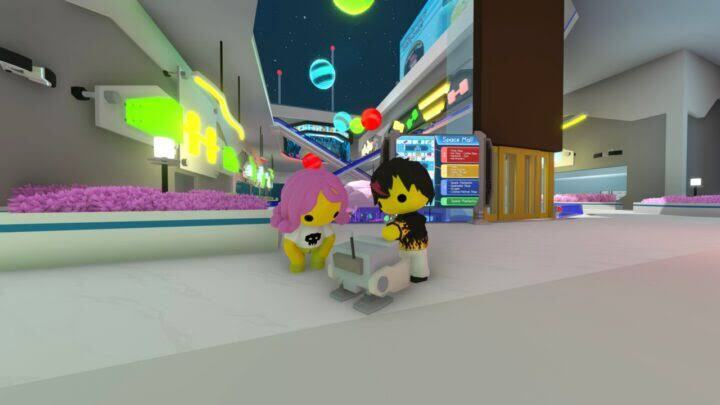
Wobbly Life is primarily designed for co-op play, supporting local split-screen and online multiplayer. Introducing additional players fundamentally alters the economic-physics dynamic.
In a cooperative setting, task efficiency can theoretically double. One player drives while the other manages cargo in the back. However, because ragdoll collision boxes interact with other ragdoll collision boxes, multiplayer often multiplies chaos exponentially. A player accidentally grabbing their partner instead of a delivery box halts the entire economic pipeline, transforming productive labor into cooperative slapstick comedy.
7. Real Estate and Consumerism: The Inflationary Sink
The end goal of accumulated capital in Wobbly Life is purchasing assets—ranging from small wooden shacks to massive mansions, helicopters, and luxury sports cars. These purchases serve as permanent spawn points and flex items within multiplayer sessions.
However, the steep price curve of high-end real estate highlights the grind required by the game's economy. When a house costs thousands of dollars and an average perfect job run pays out between $30 and $70, the player must complete dozens of labor cycles. This economic design demands repetition, which directly conflicts with the spontaneous, volatile nature of a physics sandbox.
8. Emergent Workarounds: How Players Game the Physics
Faced with the strict economic demands and chaotic physics, the Wobbly Life community has engineered creative, emergent strategies to bypass mechanical frustration. Players leverage the physics engine against itself to maximize profit efficiency.
Player-Engineered Efficiency Exploits
- The Grab-Warp Glitch: Using dual-arm tension against heavy objects to propel the character across the map faster than high-tier sports cars.
- Door-Lock Cargo Stacking: Jamming items into vehicle cabs rather than truck beds to exploit door collision meshes that prevent items from clipping out.
- Multi-Job Overlapping: Triggering multiple delivery jobs simultaneously to route optimal delivery pathways across Wobbly Island.
9. The Developer’s Dilemma: Balancing Fun Chaos and Fair Rewards
For developer rubberbandgames, fine-tuning Wobbly Life presents a constant balance effort. Patching out every physics glitch or dampening the ragdoll mechanics would strip the game of its core charm and identity. Conversely, leaving the physics completely unconstrained risks frustrating players who want to achieve tangible progression.
Updates over time—such as adding check-pointed job tasks, easing time constraints on difficult job tiers, and expanding the non-job arcade modes—demonstrate an awareness of this issue. By providing non-economic sandboxes alongside the main career mode, the game gives players a pressure-valve to enjoy pure physics destruction without financial consequences.
10. Conclusion: Reconciling the Wobbly Paradox
The lasting appeal of Wobbly Life lies in its willingness to let design philosophies clash. By placing a strict, capitalistic progression structure on top of an inherently unpredictable physics engine, the game turns mundane tasks into high-stakes comedies of error. The economic grind gives purpose to the movement, while the chaotic ragdoll mechanics ensure that no two job runs ever play out the same way. What could easily have been a frustrating exercise in mechanical breakdown becomes, instead, a celebration of resilience and playful adaptability.
Ultimately, this tension between economic order and physical chaos is what defines the experience. The game does not ask players to master its physics through perfection, but to embrace the inevitable collapses, spills, and unexpected launches into the sky along the way. In doing so, Wobbly Life proves that emergent failure can be just as satisfying as structured success—turning every lost delivery and wrecked vehicle into a memorable moment of collective hilarity.
Wobbly Life combines chaotic ragdoll physics with rigid economic goals, creating a unique tension between hilarious gameplay failure and rewarding progression.