HOW TO SURVIVE, NAVIGATE, AND MASTER ROUTINE: A COMPLETE STEP-BY-STEP GUIDE

Introduction
ROUTINE is a first-person sci-fi horror exploration game set on an abandoned lunar base known as the Lunar Transfer Station. The facility is filled with silence, malfunctioning technology, hidden logs, locked doors, corrupted systems, and unpredictable robotic threats. Surviving ROUTINE is not simply about avoiding enemies; it is about understanding how to think, move, search, and plan in a world where every sound can cost you your life. Unlike many horror games that rely on scripted sequences, ROUTINE creates fear through uncertainty—nothing behaves exactly the same way twice.
This guide provides a complete, practical, step-by-step breakdown of how to progress through ROUTINE, how to navigate the station safely, how to manage limited resources, how to avoid and outsmart android threats, and how to make sense of the story buried across the moon. By the end, you will have a blueprint for moving decisively through the station instead of wandering blindly. This is not a general overview. This is a detailed manual designed for survival.
Understanding the Lunar Station Environment
Before you take your first major steps into ROUTINE, you must understand the nature of the environment you are entering. The station is not laid out like a typical FPS map; it is a maze of depressurized hallways, maintenance shafts, security checkpoints, labs, sleeping quarters, and locked data rooms. Many doors require clearance levels or power reroutes, which means a large part of gameplay involves scanning objects, backtracking to find fuses or keycards, and reactivating dormant systems.
The station is deliberately under-lit. Most of the time, your flashlight will be your main tool, but using it too frequently can attract unwanted attention from patrolling androids. The game encourages you to think like a technician rather than a soldier. Look at ventilation paths, floor panels, and access hatches. These environmental clues help you avoid danger and discover useful alternate routes that prevent you from walking straight into hostile patrols.
Sound plays an enormous role. Machines hum, doors hiss, cables crackle, and distant echoing footsteps often signal danger. Pay attention to anything that sounds abnormal. Use the environment to plan your movement. A hallway with several hiding spots is safer than one long, open corridor, even if the latter takes you close to your objective. ROUTINE rewards caution and observation long before it rewards speed.
How to Manage Your Tools and Personal Equipment
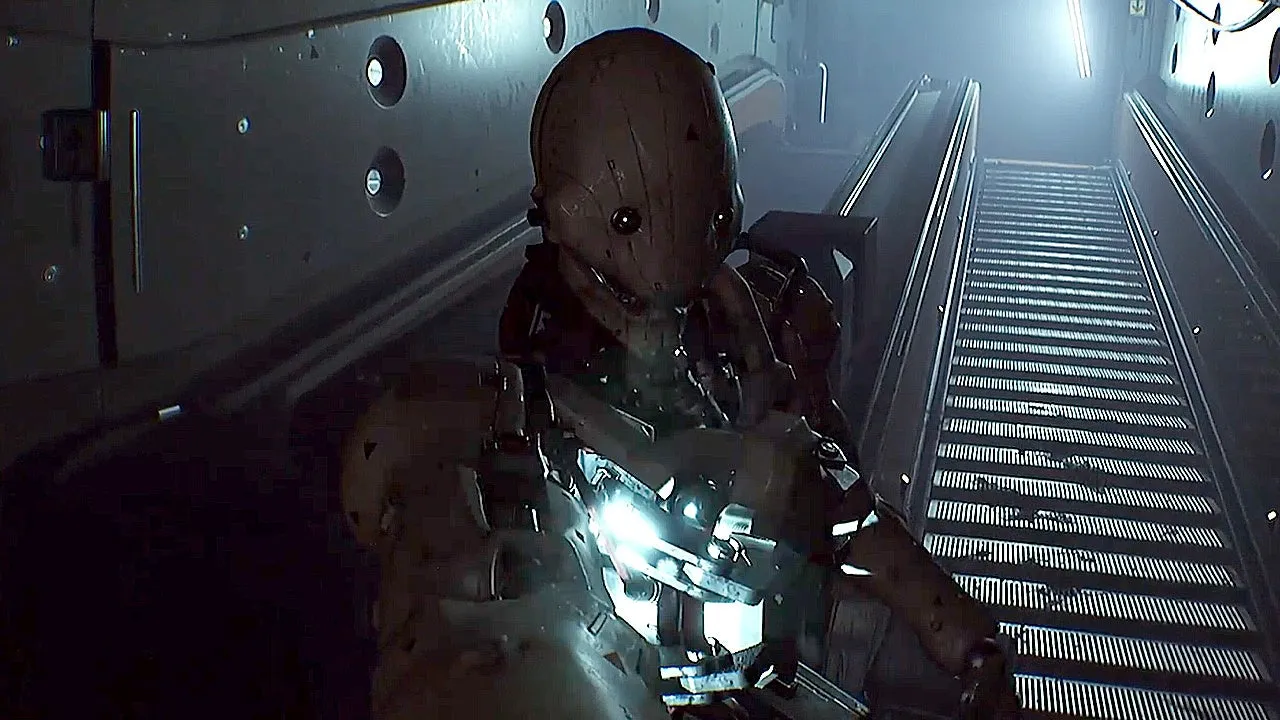
Your primary piece of equipment is the Cosmonaut Assistance Tool (C.A.T.), an electronic scanning device capable of interacting with consoles, opening sealed doors, siphoning power, extracting data logs, and overriding systems. Unlike weapons in other games, this device is not designed for combat. Its purpose is utility. Your mastery of ROUTINE depends on how effectively you use the C.A.T.
Learn to read the interface. The device highlights objects, ports, and panels that can be interacted with. It also stores encrypted logs that gradually reveal the station’s backstory. Treat the C.A.T. not as an optional gadget but as an extension of your character. Through this tool, the entire station becomes readable.
Your flashlight is essential, but its battery drains quickly. Preserve energy by using it in short bursts. Do not move with the flashlight on unless absolutely necessary. Instead, flash it briefly to identify environmental hazards, find door labels, check corners, and then move forward with memory and sound cues. You will also find power cells that can be redistributed between systems. These are limited. Use them strategically, activating only the systems that truly matter for your immediate goals.
Mastering Movement and Stealth
Movement in ROUTINE is slow, deliberate, and weighted. Running creates noise and should only be used as a last resort. Walking is safer but still produces sound that androids can detect if you are too close. Crouch-walking is the most reliable method of silent movement. In almost every area with hostile threats, crouch movement should be your default.
The environment is filled with shadows. Learning how light works in ROUTINE is essential to survival. Staying in the dark reduces your visibility, but enemies with sensitive sensors may still detect movement. Therefore, staying still in darkness is as important as staying hidden. When you hear a patrol approaching, stop moving entirely. Let the android pass before repositioning.
Doors create noise when opened. Instead of opening every door quickly, tap them to partially open and peek through. This small behavior drastically reduces your chances of exposing yourself to danger.
Another crucial element is line-of-sight control. Androids patrol in predictable but reactive patterns. If one spots movement, it will investigate, scan the area, and then widen its search radius. Never let yourself remain in a straight hallway when a threat is approaching. Duck into a room, hide behind crates, or reposition behind structural supports.
Navigating Patrol Patterns Safely
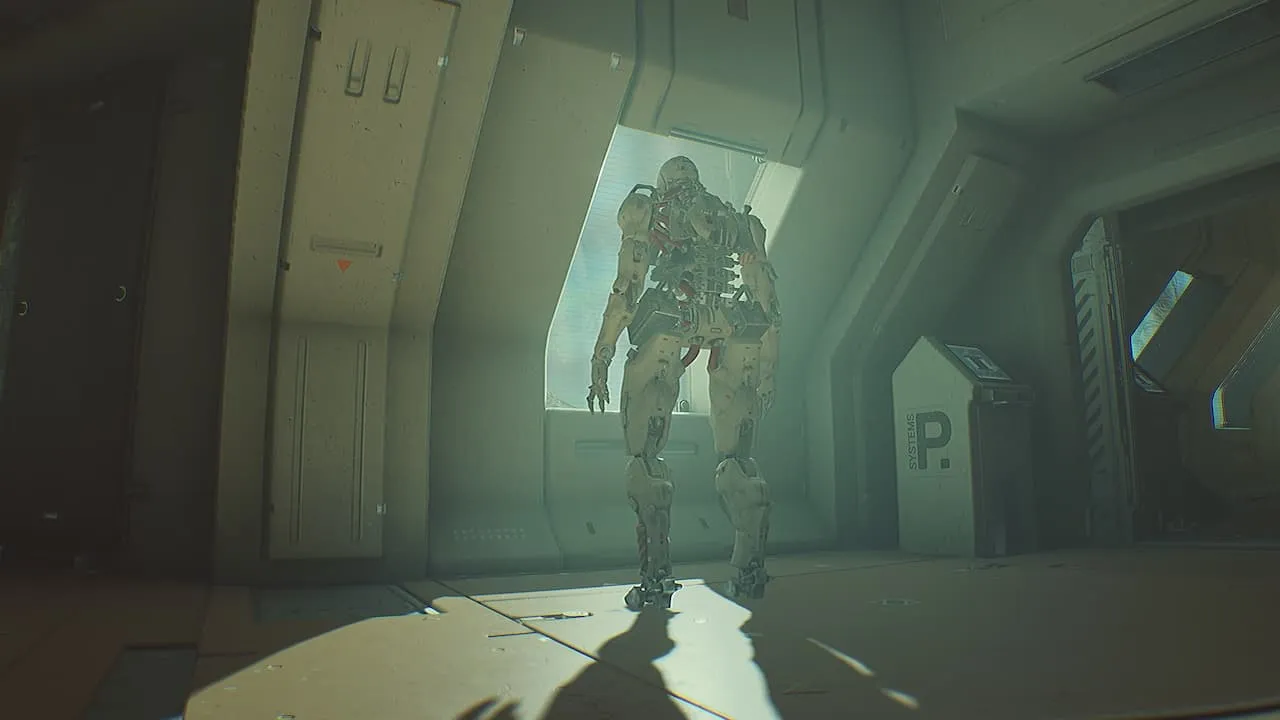
Androids are the main threat in ROUTINE and each unit behaves differently based on its programming and condition. Some androids patrol strict loops. Others react dynamically depending on environmental triggers such as broken machinery or power fluctuations. The key to survival is studying their patterns before committing to movement.
When you enter a new area, take 10–15 seconds to observe. Listen closely. A steady clanking rhythm usually signals a patrolling android. If you hear irregular tapping or static distortion, the unit may be damaged, making its behavior unpredictable. Approach these units with extreme caution.
Do not attempt to outrun an android in a straight corridor. Their acceleration is faster than yours. The correct approach is to break line of sight by turning corners, weaving between machinery, or using small utility rooms to hide. Androids do not instantly lose track of you—they follow your last known direction. Use this to your advantage by misleading them. Move in one direction long enough to let them commit, then quietly double back through an alternate route.
Remember that androids can detect light sources. If you turn your flashlight on near an active patrol, expect an immediate reaction. Move slowly, breathe, and let the environment do the work. With enough patience, nearly any patrol can be bypassed without direct confrontation.
Solving Puzzles and Overriding Systems
ROUTINE’s narrative unfolds through terminals, logs, power systems, and environmental puzzles. Each puzzle is designed to blend into the station naturally. Solutions require logical observation rather than abstract thinking.
Most puzzles revolve around power: rerouting energy to doors, life support mechanisms, elevators, or communication nodes. When you find a fuse box or power junction, examine where each circuit leads. You may have to power down a section of the station to progress through another. This creates risk—lights flicker, machines reboot, and security systems change behavior.
Some puzzles involve sequencing. You may need to activate consoles in the correct order, extract corrupted data fragments, or bypass electronic locks using timing-based interactions through your C.A.T. If a sequence seems unclear, look for clues in nearby rooms. Engineers often left notes on whiteboards or audio logs explaining maintenance routines. Treat every piece of information seriously; ROUTINE rarely gives useless data.
At times, you will encounter locked rooms requiring higher-level access. These access points are usually tied to narrative progression. Follow the story crumbs, gather logs, and trace the identities of the staff. Keycards and security clearances are often linked to specific personnel whose biographies are hinted at in multiple logs.
Exploring Safely Without Getting Lost
The lunar station is large, interconnected, and intentionally disorienting. Unlike many modern titles, ROUTINE does not hold your hand with objective markers or bright navigation arrows. You must build your mental map as you progress.
Use landmarks to orient yourself. Identify corridors with unique decorations, damaged sections, exposed cables, or machinery. Memorize them. This allows you to create safe fallback routes when danger arises. If you feel overwhelmed or lost, return to a known room and reset your bearings.
Looting efficiently is essential. Instead of searching every single drawer, prioritize areas like control rooms, storage units, engineering bays, and dormitories. These areas tend to hold batteries, logs, and upgrade components. Searching everything wastes time and increases the chance of running into an android patrol.
If the environment feels too quiet, assume danger. The game often uses silence as tension. Move slowly, check corners, and listen carefully before entering new rooms. Exploration is rewarding—but only if you approach it responsibly.
Managing Fear and Making Smart Decisions
ROUTINE is designed to pressure your nerves. Darkness, narrow corridors, malfunctioning robots, and sudden mechanical noises all create stress that can push you into rash decisions. Part of mastering the game is mastering yourself.
Do not rush. Fear encourages impulsive movement, which leads to mistakes. Take each room at your own pace. If you hear a noise, stop. Count to three. Listen again. Once you feel confident, proceed.
When overwhelmed, return to a safe room rather than pushing forward. The station’s design supports retreat as a legitimate tactic. Resetting your composure helps you think clearly about puzzles, navigation, and patrol avoidance.
ROUTINE’s fear factor is a gameplay mechanic. Use it as a signal. If an area feels unsafe, it probably is. Consider alternative paths or wait for patrol cycles to shift. Patience is the strongest tool you have in the game.
Reaching Late-Game Areas and Surviving Final Challenges
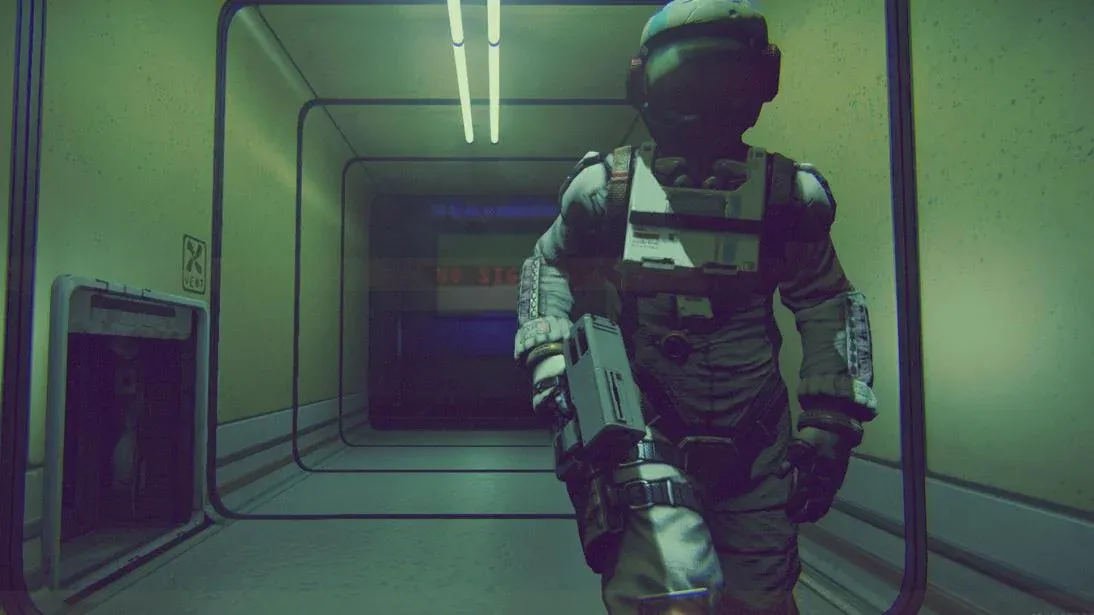
As you progress deeper into the station, new zones unlock with more advanced hazards, tighter corridors, and more aggressive patrol patterns. Late-game areas introduce corrupted androids with erratic behavior. These units may not follow predictable loops. This means the strategies you used early on must evolve.
Instead of relying solely on pattern recognition, use environmental distraction opportunities—broken doors, power toggles, and audio triggers—to lure threats away from critical paths. The final sections of the game also feature tighter resource management. You may need to divert power multiple times, searching for new fuses and reactivating older systems in the correct order.
The narrative comes together as you near the end. Continue recovering logs and use them to understand the station’s collapse. This helps you approach the final areas with foresight, predicting where dangers might be based on what happened to the crew.
Long-Term Mastery and Replays
ROUTINE rewards players who revisit the station after completing the story. Patrols shift slightly, layouts feel different, and new interactions may stand out. Replay value comes from mastering the environment, reducing unnecessary movements, and finding more efficient paths.
Once you understand the station’s layout, you can challenge yourself by minimizing flashlight use, avoiding certain areas entirely, or completing objectives in unconventional orders. Learning to move with confidence transforms ROUTINE from an intimidating horror experience into a strategic, atmospheric exploration challenge.
Conclusion
Mastering ROUTINE is about understanding your environment, controlling your movement, respecting the dangers of the lunar station, and using tools with intention rather than urgency. Patience, observation, and quiet analysis are your greatest assets. The more you learn the rhythms of the station, the more confidently you can navigate its twisting corridors, avoid its silent androids, and uncover the truth hidden in its darkened compartments. In ROUTINE, survival is not a matter of speed or aggression—it is a matter of understanding.
160-Character Summary
A complete how-to survival guide for ROUTINE covering movement, stealth, patrols, puzzles, exploration, and late-game strategy to safely navigate the lunar station.